Agentic AI vs Generative AI – What Raleigh Startups Need to Know in 2026
Last Updated on
In Raleigh’s startup ecosystem, AI is no longer a side experiment. It’s becoming part of how products are built, how operations run, and how decisions are made. But many founders are still unclear about one key shift: Agentic AI vs. generative AI.
Most teams started with GenAI tools—content, code, quick insights. Now, the conversation is moving toward systems that don’t just respond, but act. That’s where this shift matters.
With a Gen AI development company, you can build tools that generate content, write code, or analyse data on demand. However, building an agentic AI system takes it further by acting on that output. Such a system can execute tasks and move workflows toward a defined goal without constant human input.
What is Agentic AI?
If you’re asking what is agentic AI, think beyond outputs.
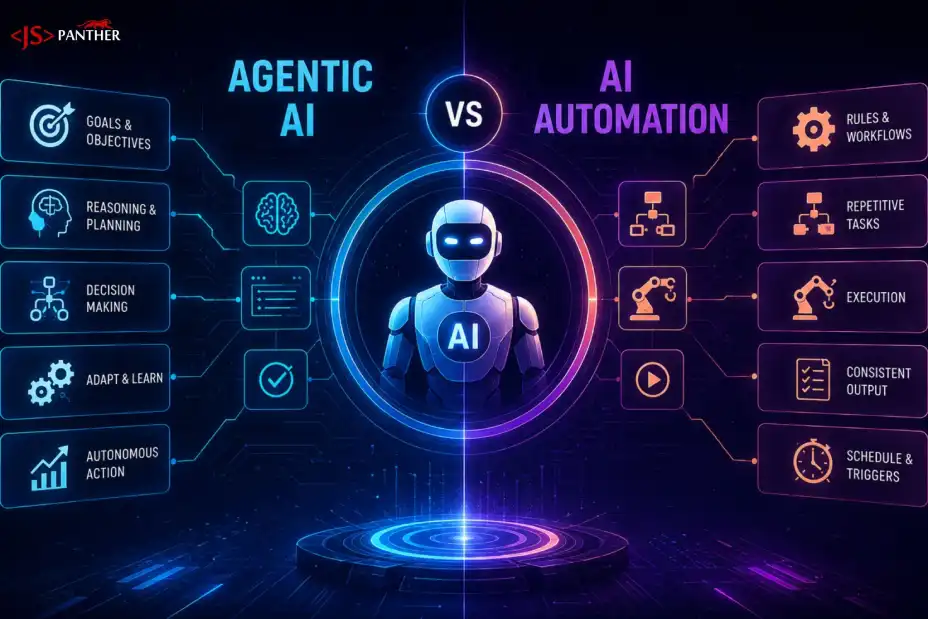
Agentic AI is built around goals. You define an objective, and the system figures out how to achieve it. It plans, executes, adapts, and continues until the task is done.
Instead of one response, it operates as a loop:
- Understand the goal
- Break it into steps
- Execute tasks using tools
- Adjust based on results
It’s not just assisting—it’s coordinating.
Agentic systems can maintain context across tasks. They use APIs, tools, and data sources. Overall, they are capable of running multi-step workflows to adapt decisions in real time.
These systems perceive, plan, and act in sequence to complete tasks with minimal human input.
That changes how work moves inside a startup.
What is Generative AI?
Generative AI (Gen AI) is built to create. You give it a prompt, and it produces something—text, code, images, or summaries.
It’s fast, useful, and easy to plug into early-stage workflows. That’s why Raleigh startups adopted it quickly for:
- Writing product copy
- Drafting emails and support replies
- Generating code snippets
- Summarising documents
But there’s a boundary. Gen AI responds to instructions. It doesn’t decide what to do next. It doesn’t manage workflows. It doesn’t carry work forward. According to McKinsey & Company, generative AI could add $2.6 to $4.4 trillion annually to the global economy.
Generative systems are reactive by design and depend on prompts to function.
So while Gen AI improves speed, it still relies on people to drive outcomes.
Agentic AI vs. Generative AI – Quick Comparison
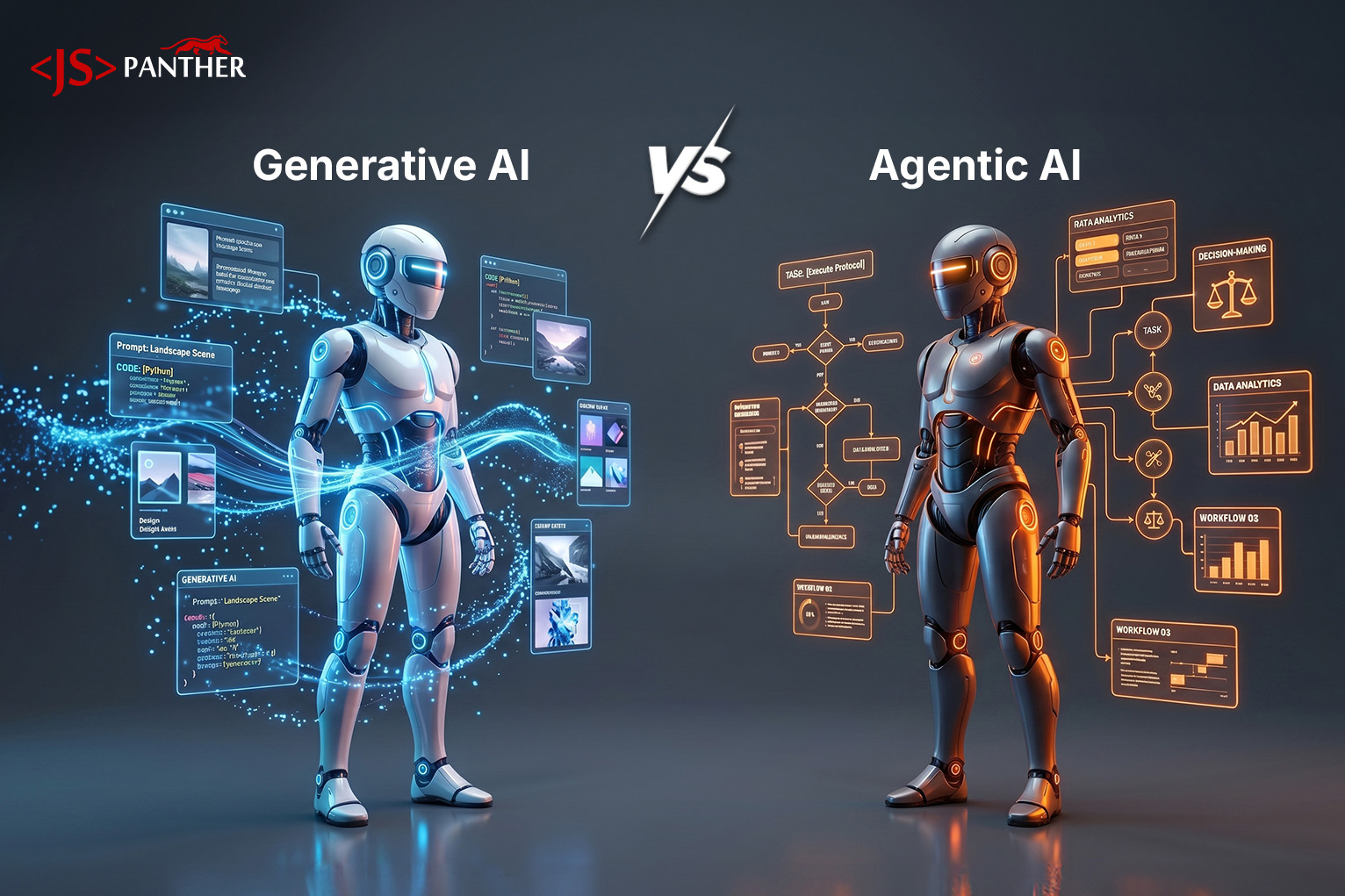
Here’s a clear view of Agentic AI vs. gen AI in practice:
| Capability | Generative AI (Gen AI) | Agentic AI |
| Core function | Creates content | Completes tasks |
| Behaviour | Reactive (waits for prompts) | Proactive (acts on goals) |
| Task scope | Single-step | Multi-step workflows |
| Memory | Limited / session-based | Persistent, context-aware |
| Decision-making | Human-led | System-assisted within rules |
| Output | Text, code, media | Actions, outcomes, decisions |
| Example | Writes an email | Sends, tracks, and follows up |
This table captures the real difference: Gen AI helps you start work. Agentic AI helps you finish it.
Deep Comparison: Where the Gap Shows Up
The agentic AI vs generative AI examples become clearer when you look at real workflows. The difference is not in what AI can say—it’s in what actually gets done without human follow-up.
1. Sales and CRM
- Gen AI: Writes a follow-up email
- Agentic AI: Identifies leads, drafts emails, schedules sends, updates CRM
The system moves from writing to execution. In a typical startup sales cycle, the delay rarely comes from writing emails. It comes from timing, tracking, and consistency.
Gen AI solves the writing part, but someone still has to decide when to send, who to follow up with, and what context matters.
Agentic AI closes that gap. It connects with CRM data, understands deal stages, and ensures follow-ups don’t slip through. Over time, this creates a more predictable pipeline, not just better-written communication.
2. Product Development
- Gen AI: Suggests features or generates code
- Agentic AI: Plans sprint tasks, assigns priorities, tracks progress, flags blockers
Now, AI becomes part of delivery, not just ideation. Early-stage teams often move fast on ideas but slow down during execution, especially when priorities shift or dependencies aren’t clear.
Gen AI helps developers move more quickly at a task level, but it doesn’t manage the flow of work.
Agentic AI starts to operate across the sprint. It can map dependencies, adjust priorities based on timelines, and highlight risks before they become blockers. That changes how teams plan, not just how they build.
3. Operations
- Gen AI: Summarises reports
- Agentic AI: Monitors metrics, detects issues, triggers actions
This is where startups start saving time, not just generating insights. Many teams already have dashboards and reports, but insights often sit unused because no one acts on them immediately.
Gen AI helps interpret the data, but the burden of action still sits with the team.
Agentic AI shifts this by continuously monitoring metrics and acting when thresholds are crossed. Whether it’s inventory levels, system performance, or financial signals, the system initiates the next step. That reduces lag between detection and response.
4. Customer Support
- Gen AI: Replies to queries
- Agentic AI: Routes tickets, resolves issues, escalates when needed
It reduces manual coordination. In growing startups, support challenges are less about answering questions and more about managing volume and prioritisation.
Gen AI improves response quality and speed, but teams still need to decide which tickets matter most and how they move across systems.
Agentic AI handles that coordination layer. It can categorise requests, route them to the right teams, trigger workflows, and ensure follow-ups happen. This creates consistency in support operations, especially when volume increases. This is where the difference between an AI agent vs AI chatbot becomes clear—a chatbot responds to queries, while an AI agent manages the entire support flow.
Why Raleigh Startups Should Care in 2026
Raleigh’s startup scene is practical. Teams don’t adopt tech for hype—they adopt it when it moves business forward. That’s why the Agentic AI vs. generative AI decision is less about capability and more about impact on daily operations.
Here’s where it becomes a real decision:
1. Speed vs Continuity
Gen AI speeds up tasks. Agentic AI keeps work moving without gaps. In most startups, delays don’t come from doing the work. They come from switching between tasks, waiting for decisions, or losing context between steps.
Gen AI improves speed at each step, but Agentic AI connects those steps into a continuous flow. That continuity becomes more valuable as operations grow. Gartner predicts that by 2028, 33% of enterprise software applications will include agentic AI capabilities.
2. Tools vs. Systems
Gen AI is a tool inside workflows. Agentic AI becomes the workflow layer. Startups often stack multiple tools like CRM, analytics, support, and product management. However, they still rely on people to connect them.
Gen AI fits into one part of that stack. Agentic AI starts to sit across it, coordinating how these tools interact. That reduces fragmentation and makes processes more consistent.
Build AI Systems That Drive Real Outcomes and ROI.
We design and develop AI solutions tailored to your workflows
Talk to us
3. Headcount Pressure
Startups can’t scale teams endlessly. Agentic systems reduce coordination overhead. Hiring more people often adds complexity like more handoffs, more communication, more delays.
Gen AI helps individuals work faster, but Agentic AI reduces the need for constant coordination between people. It takes on repetitive decision-making and process management, allowing teams to stay lean without slowing down.
4. Execution Gap
Many startups generate ideas faster than they execute them. Agentic AI directly addresses that gap. This is one of the most common issues in early-stage companies like strong ideas, but limited bandwidth to follow through.
Gen AI accelerates thinking and creation, but Agentic AI focuses on completion. It ensures that ideas move through planning, execution, and follow-up without getting stuck between steps.
The Real Shift: From Output to Ownership
The biggest misunderstanding in the Agentic AI vs. generative AI discussion is thinking it’s just about capability.
It’s actually about ownership of work.
Gen AI → You still own the process
Agentic AI → The system starts owning parts of the process
That’s a structural shift. For Raleigh startups, this means rethinking:
- How tasks are assigned
- Where decisions happen
- How systems interact
Final Thought
In 2026, the question isn’t whether to use AI. That decision is already made. The real question is this: Are you building systems that respond, or systems that operate?
Because the startups that move ahead won’t just generate more—they’ll execute faster, with fewer gaps between decisions and outcomes.
That’s where Agentic AI starts to matter.