How AI and Modern Frameworks Are Changing Web App Development for Startups
Last Updated on
Building a web app used to mean months of work before a startup could show customers anything useful. Even a simple product needed login screens, admin panels, and payment flows built by hand.
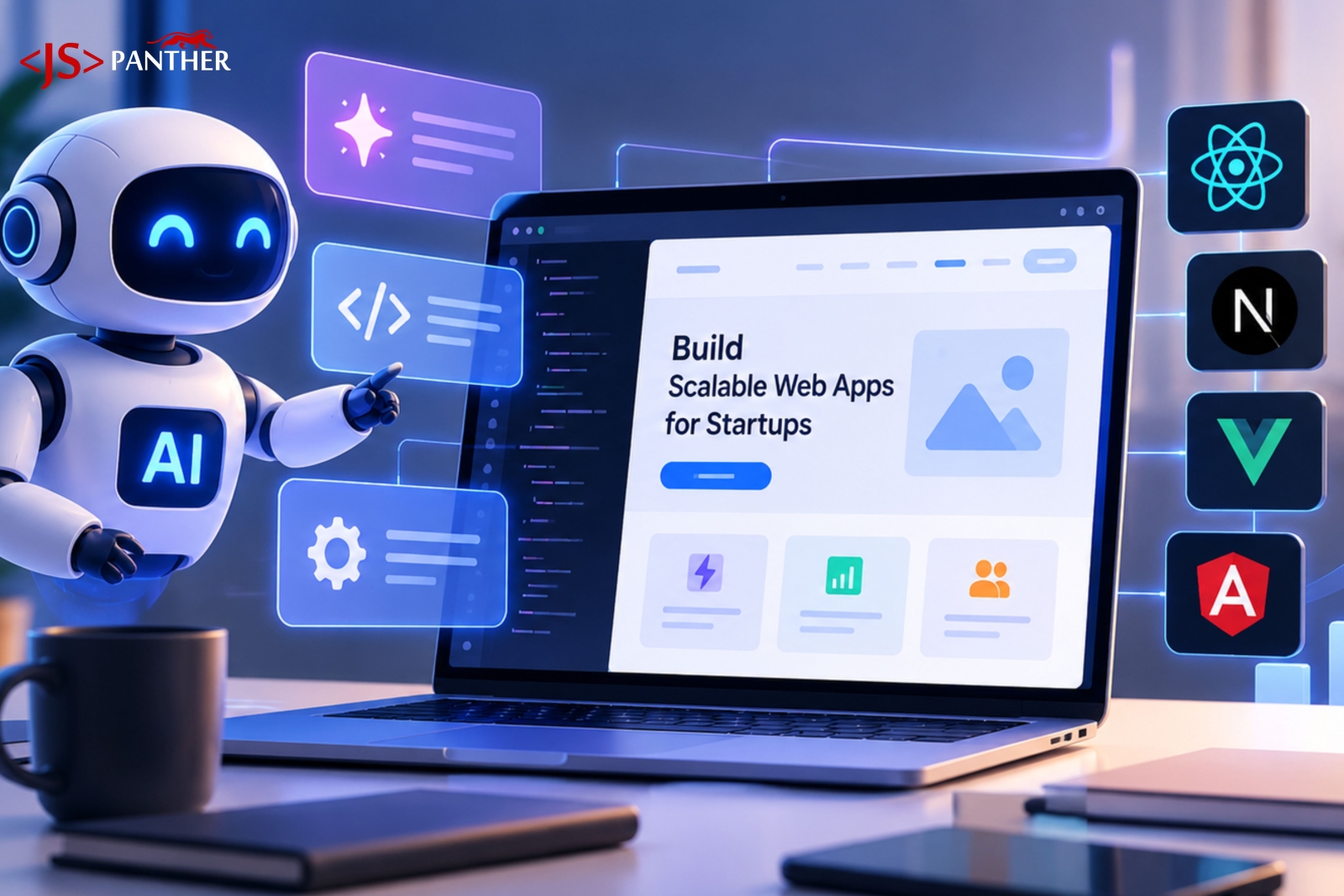
That’s changing fast. AI tools now help developers write, test, and review code, and modern frameworks handle much of the groundwork. For startups, the real win isn’t just launching sooner. It’s spending less time on repetitive work and more time on the problem your product exists to solve.
Short Answer
Startups are using AI and new frameworks to build web apps faster, test ideas sooner, and keep development costs down. AI can help with writing code, testing, and troubleshooting. Frameworks like React, Next.js, and Laravel give developers building blocks instead of a blank page.
Together, they help startups:
- Launch a minimum viable product (MVP) with only the features that matter
- Spend less time on repetitive coding
- Add useful AI features like chatbots and smart search
- Grow the app as customer demand grows
The biggest benefit? You can find out whether customers want your product before you commit a large budget.
How Is AI Changing Each Stage of Web App Development?
AI now shows up at almost every step of a project, not just the coding part. Here’s how it helps from the first idea to a live app.
- Planning: AI can organize interview notes, draft feature lists, and spot gaps. It can’t decide what your customers will pay for.
- Design: AI design tools turn a rough sketch or description into screen layouts in minutes, so you can test a few ideas with real users before building one.
- Coding: Assistants like GitHub Copilot, Cursor, and Claude write standard code, suggest fixes, and explain unfamiliar code.
- Testing: AI makes it easier to write tests early, so bugs show up before your users find them.
- After launch: AI tools can watch performance and flag unusual errors, which helps a small team look after a live app.
What Are Modern Web Development Frameworks, and Why Do Startups Need Them?
A framework gives developers a ready-made structure for building software. They don’t start from an empty project. They use tested tools for common jobs like user accounts and security.
Think of it like fitting out a new office. You decide the layout and how the space works, but you don’t manufacture every door and light switch yourself.
| Framework | What It Helps With | Common Startup Use |
| React | Interactive screens | Customer portals and dashboards |
| Next.js | Fast, search-friendly web apps | SaaS products and public-facing platforms |
| Laravel | Accounts, business logic, and data | Booking systems and business platforms |
| Django | Data-heavy apps built with Python | Internal tools and AI-powered features |
There’s no universal winner. A good team picks the framework based on your product’s needs, not its own favorite technology.
Can AI and Modern Frameworks Reduce Web App Development Costs?
Yes, but the savings depend on how the project is planned.
AI cuts the time developers spend on repetitive tasks, and frameworks provide features that would otherwise take extra hours to build. Still, the biggest savings usually come from building fewer features at the start.
Picture a startup building a subscription platform for small businesses. The founders want reporting, billing, messaging, and AI recommendations at launch. Do they need all of that to win their first ten customers? Probably not. Accounts, subscriptions, and one core workflow are often enough to start. The rest can follow once real feedback shows it’s worth building.
This is where a good web app development company for startups earns its fee. The right partner pushes back on features you don’t need yet instead of agreeing to build everything.
How Do AI and Modern Frameworks Help Startups Scale?
An app that works well for 50 users can struggle with 5,000. Slow pages and failed requests quickly hurt customer trust. Modern frameworks keep code organized, which makes the app easier to update as it grows. AI can help review code and point out likely performance problems.
But scaling doesn’t come free with a framework. Database design, hosting, security, and testing still matter. You don’t need an enterprise-grade setup on day one, but you do need a sensible foundation. Otherwise, early shortcuts turn into a costly rebuild.
Should Startups Add AI Features to Their Web Apps?
Only when AI solves a real problem.
A chatbot can answer routine customer questions. Document reading can pull data from invoices and save hours of manual entry. Smart search can help users find what they need across thousands of records. Those are practical uses.
Adding AI just to look innovative is a different story. Before you invest, ask three questions:
- What specific task will AI improve?
- How will we measure whether it works?
- What happens when the AI gives a wrong answer?
Sometimes a simple automated workflow is cheaper and more reliable than an AI feature.
Talk to our Raleigh team. We'll help you pick a practical starting point and plan a product that can grow with your business. Planning a web app for your startup?

Where Does AI Still Need a Human Developer?
AI is a strong first-draft writer and a weak final reviewer. In the 2025 Stack Overflow Developer Survey, the most common complaint from developers was AI answers that are “almost right, but not quite.”
In a B2B product, “almost right” can mean a broken payment, a wrong customer record, or a security gap. So AI won’t replace developers. It changes their job: less typing, more planning, reviewing, and testing.
What Should Raleigh Startups Look for in a Development Partner?
Finding a developer isn’t the same as finding the right partner.
When comparing web app development Raleigh teams, look past the list of programming languages on their website. Ask them:
- What would you cut from our first version, and why?
- How do you use AI, and who reviews its work?
- Will we own all the source code and accounts?
- What happens after launch if something breaks?
How Does JS Panther Help Startups Build AI-Ready Web Apps?
If you’re weighing the web development services Raleigh has to offer, here’s how we work. JS Panther has been based in Raleigh since 2018, with 49+ in-house developers, and we’re a Raleigh Chamber of Commerce member.
AI handles routine work. Our senior engineers make the architecture calls and review what ships. The framework follows the problem. For a US-based tax consulting firm, we built a GST filing web app with React.js, Node.js, PostgreSQL, and AWS to cut manual checks. For a hospital, we rebuilt an outdated bed management system as a web app using Angular, TypeScript, and Node.js.
Frequently Asked Questions
How long does it take to build a startup web app in the USA?
Most startups launch an MVP in 6 to 16 weeks. If you only need a quick prototype, no-code or AI-built tools can get you there in a few days to a few weeks. A full, production-ready web app built by a traditional agency usually takes longer, often 3 to 6 months.
How much does it cost to build a startup web app with AI in the USA?
An AI-first MVP usually costs between $8,000 and $60,000, depending on how complex it is. No-code and AI builder tools cost less, from $0 to $2,400 per year. An agency-built MVP generally costs $15,000 to $160,000 or more, with the higher end for complex apps that need to scale.
Can AI reduce the time and cost to build a startup web app?
Yes. AI coding tools, combined with AI-first teams, can reduce development time by 40 to 60% and cut costs by about 30 to 50% for the same scope. This helps startups get an MVP to market faster and on a smaller budget than the development methods startups used just a couple of years ago.
Can we add AI features to an existing web app?
Yes, in most cases. You usually don’t have to rebuild your app. It can connect to an AI service to add features like a chatbot or smart search. Most of the work is in preparing your data. Make sure it is clean, organized, and safe to share before you start.